We learned from Self-Determination Theory that self-determination refers to a person’s ability to make choices and manage their own life. Following are few more lessons:
- Extrinsic motivators can sometimes lower self-determination; i.e., people begin to feel less in control of their behavior, and intrinsic motivation falls.
- Positive feedback can boost self-determination. Deci suggests offering unexpected positive encouragement and feedback on a person’s task performance can increase intrinsic motivation.
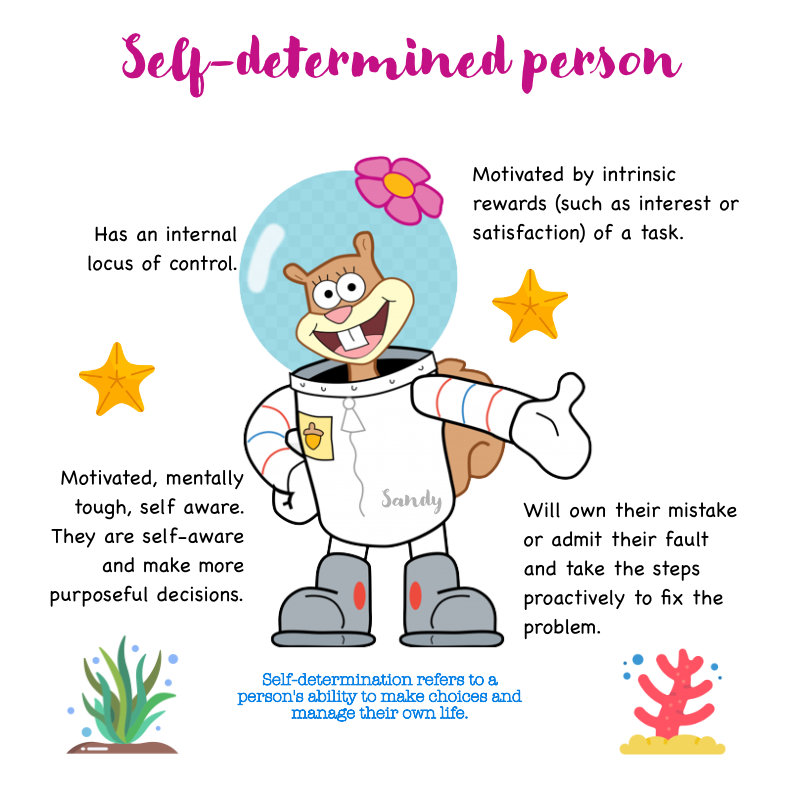
- A person high in self-determination will own their mistake or admit their fault and take the steps proactively to fix the problem.
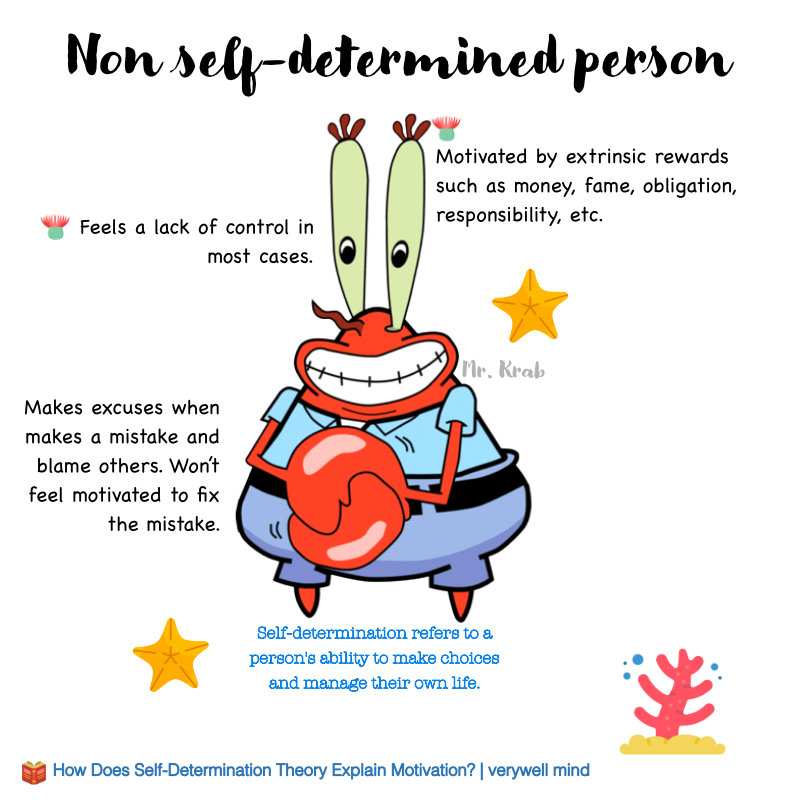
- If he makes a mistake, a person low in self-determination will make excuses and try to ascribe the error to other things. He won’t feel motivated to fix the mistake. He might instead feel helpless to control or improve the situation.
- Self-determined persons are motivated by the intrinsic rewards of a task, such as interest or satisfaction. People who are not self-determined will be inspired by extrinsic rewards such as money.
- Self-determined persons have an internal locus of control. Non-self-determined people feel a lack of control in most cases.
- Self-determination fosters motivation, success, and mental toughness. Self-determined people have an internal desire to set goals and work toward them. They are self-aware and make more intentional decisions.
- Continuous learning and improving skills can help you feel more competent and self-determined.
- Meditation, seeking regular feedback, and writing down your thoughts and feelings are all ways to improve self-awareness.
“Most actions are not purely self-determined or non-self-determined. Instead, actions often rely on a certain degree of self-determination that may also be influenced by extrinsic motivations.”
References:


