We started an indoor cellular network project for a healthcare campus in 2021. The client named this project MDAS. Our scope was 40 buildings on the campus and over 12 million sqft, and we had just two years to finish it.
The MDAS project started during the pandemic, and most of the project ran during the thick of COVID. So, there was a bit of concern among the team if we could finish the project in time. Like many other projects, we set out with lead and lag measures and got to work. Did we finish it in time?
Before giving that answer, let us quickly look at the Guided Productivity System (GPS) we set up for the MDAS project.
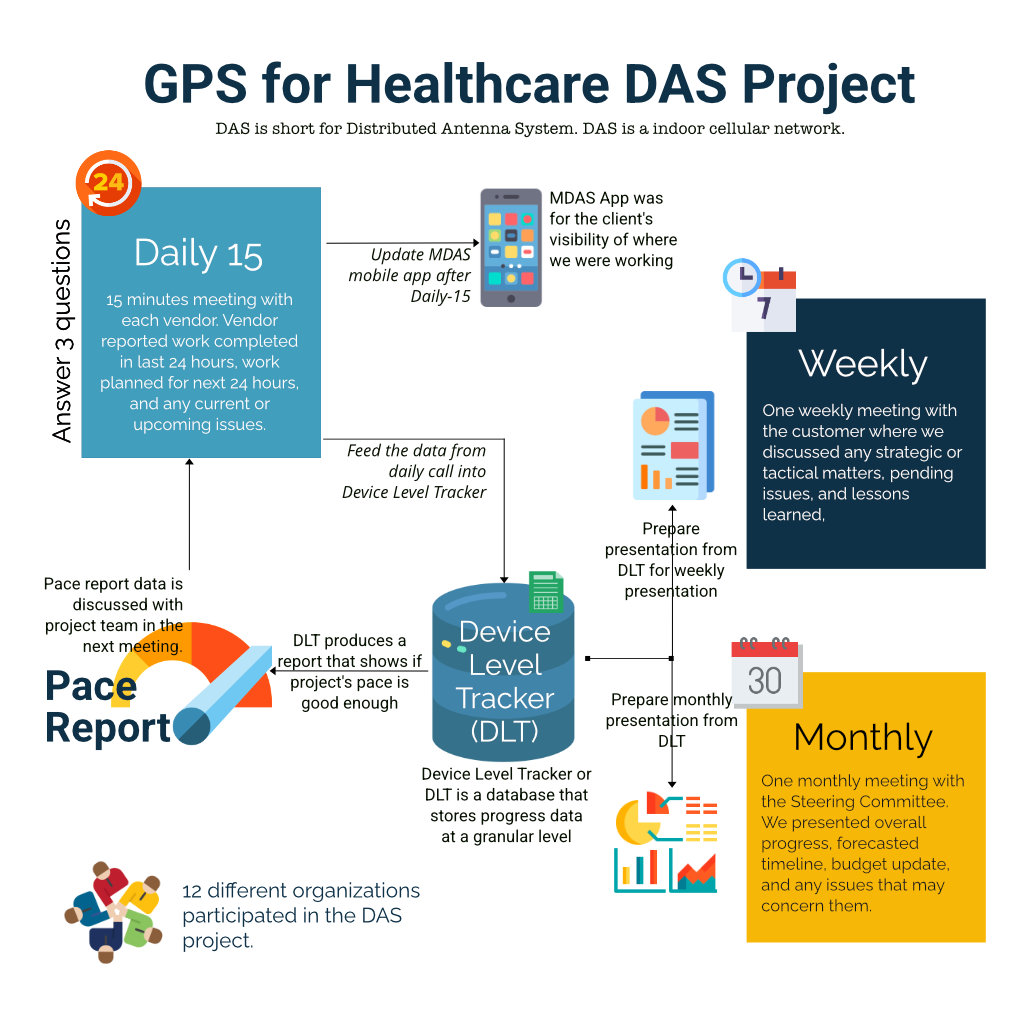
Daily-15: Every day, we had a 15-minute call with our low-voltage vendors – the guys installing the system’s infrastructure. Our market project manager – Paul – would ask just three questions:
- What did you accomplish in the last 24 hours?
- What is your plan for the next 24?
- Do you anticipate any issues in the next few weeks?
Paul would also discuss the pace of progress the vendor achieved and what speed they will need to reach the goal in time.
Device Level Tracker: Jose would enter the progress data from the Daily15 into our proprietary database we call Device Level Tracker. DLT took these granular data and rolled them into comprehensive summary data. As a result, we could tell our customers any day what percentage of the work we completed and if we were on track to meet our goal within the project timeline. DLT also produced the pace report that Paul shared during the Daily-15.
MDAS Mobile App: After the morning Daily-15 call, Jose updated the MDAS mobile app we built for this project. The goal of the mobile app was to let the Facilities Management of the Healthcare Organization know where and who we would work on that day and the next day. We also put a brief note on any anticipated issues. These updates made the facilities management groups aware of our activities and the locations of those activities, and this information helped them coordinate their daily activities.
Weekly Meeting: We also met (weekly) with the client team and the other groups of suppliers and stakeholders. The DLT helped us produce the data needed for this meeting. In this meeting, we discussed the deployment progress, lessons learned, upcoming administrative tasks, resolution of issues, pre-mortem, continuous process streamlining, etc.
Monthly Steering Committee Meeting: Our client also requested we present monthly to their steering committee. The Steering committee consisted of the CTO, several VPs, and the client organization’s directors. In this meeting, we presented the overall progress of the deployment, forecasted timeline, any issues that the committee needed to be aware of, customer surveys, etc.
The combination of all these meetings kept us on our toes and created a cadence of accountability for the deployment team. We gave or received feedback throughout these meetings and updated our plans or processes as needed. We discussed what was going well and what needed to be improved. The process was like a live organism, and it grew more and more robust as we progressed through the project.
From a technical perspective, the MDAS project, by no means, was easy. The team went through a lot of heartaches and headaches. But they had clarity of vision and plan, felt psychologically safe, and had a good dash of autonomy and optimism. They did finish the project in time (one year and seven months) and were under budget.


