We launched our wireless engineering company over 20 years ago. Since then, we have worked on over five thousand projects. Over the years, our project culture moved from one extreme spectrum of psychological safety to the other. Our concept of psychological safety morphed and took different shapes over time. We were reactive and rigid (no psychological safety), and then we were too ‘coddling’ and ‘nice’ (psychological safety reigned supreme). I observed the pros and cons of the two extremes and found that a balanced approach to psychological safety works best.
CEO of LeaderFactor, Tim Clark, wrote an excellent article on what psychological safety is not. My research findings resonate with his ideas.
Project teams are made of humans, and we must respect every individual’s core identity as a human being. This identity is a function of a person’s race, creed, or worldview, and this basic respect is non-negotiable.
A step above this fundamental respect, a project stakeholder should not fear retribution, ridicule, or avoidance from her team or leadership if she is expressing new or creative ideas, or out-of-box thinking or opinions, even if it goes against the team’s consensus. She should not be punished, embarrassed, or sidestepped if she tries to hold someone accountable for legitimate reasons. If not managed properly, psychological safety can bring in some undesired experiences among the project team. For the rest of this post, I will use PS as an acronym for psychological safety.
Effect of psychological safety on accountability
Psychological safety (PS) is by no means a lack of accountability. When unbalanced, PS can create an unfair project environment. Non-performing employees can try to get away with poor performance by looking for shelter under psychological safety. Chronic non-performer must be held accountable; psychological safety must be balanced by an equal accountability measure.
PS can make us complacent.
Time is of the essence in a project environment. Complacency can be a cancer for project completion. Yet depending on the personality, PS can make some workers complacent with their so-called ‘best effort.’ They stop being creative and don’t push their skillset boundaries. If unchecked, this can seriously impact the project’s performance.
PS is not being nice:
People often misunderstand psychological safety as ‘being nice.’ A project environment immersed in this distorted perception of PS can give rise to a merry indifference to challenging debate and intellectual friction. As a result, organizational decision-making slows down – paving the way for the project’s demise.
Misinterpreting Autonomy:
I wrote about the importance of autonomy in the Self Determination Theory from Edward Deci and Robert Ryan. Daniel Pink also stressed the importance of autonomy in his MAP model for motivation.
I am a strong advocate for ‘affordable’ autonomy in any project. There is no need to micro-manage any team and give them as much flexibility and freedom of work as the project can afford.
Build projects around motivated individuals. Give them the environment and support they need, and trust them to get the job done.
Principle #5, The 12 Principles behind the Agile Manifesto, Agile Alliance
Some workers, however, misinterpret PS as an entitlement to wanton autonomy. Autonomy is not an entitlement and should be based on a worker’s performance, and the Project Managers should make this distinction clear.
The value of teamwork is premium in a project. Stay in sync with your partners. It’s a game of collaboration, and there is no room for a maverick in a project.
The balancing act
QTB (Quality, Time, Budget) is king for most traditional projects; a project’s success will result from the expected quality of deliverables and allocated time and budget. In HCPM, the relationship between stakeholders’ experience and project success is mutual. We don’t want success at the expense of experience, and we don’t want pleasant experiences at the cost of the project’s success.
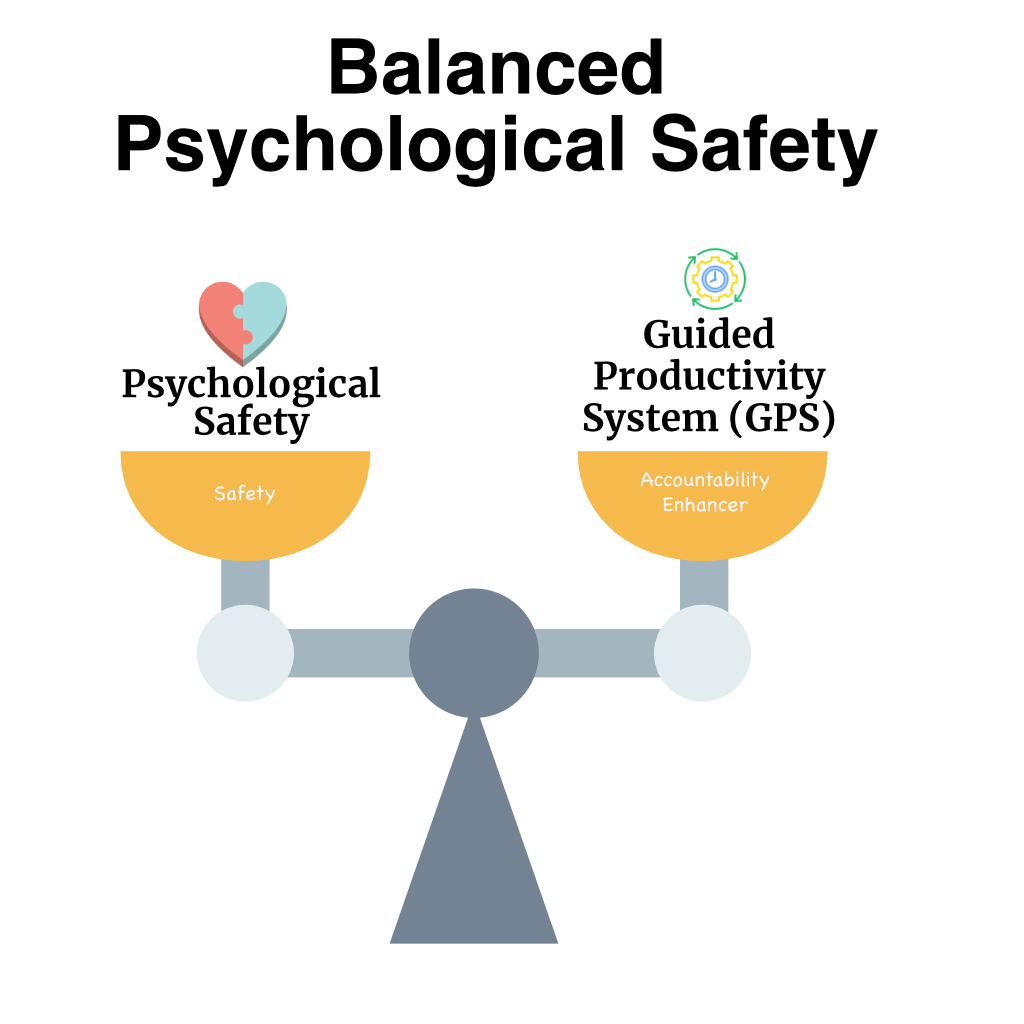
The best way to implement psychological safety is by balancing it with people with a sense of accountability and a guided productivity system (GPS).
Reference:
- Personal and Organizational Change Through Group Methods: The Laboratory Approach
- What Psychological Safety Is Not by Timothy Clark
Image Credit: Photo by Evgeni Tcherkasski on Unsplash


