
Credit: Photo by Luuk Wouters on Unsplash
Why is it hard to implement PX framework?
Projects have two significant challenges that make properly implementing the PX framework difficult.
1. Projects are time bound and short-lived. The overwhelming focus is managing budget and quality.
2. Many projects involve collaboration between several companies or organizations. These entities have their own cultures. Defining and implementing a common PX culture is challenging.
PX signals combat these obstacles. Signals ensure the execution of the PX framework.
Definition of PX Signals
PX Signals are explicit or implicit messages, actions, or inactions necessary for achieving the ultimate goal of PX – an inspired and flow state of mind. Signals help create, maintain, and enhance the vibe and ambiance needed to reach the peak PX state.
Channels of PX Signals
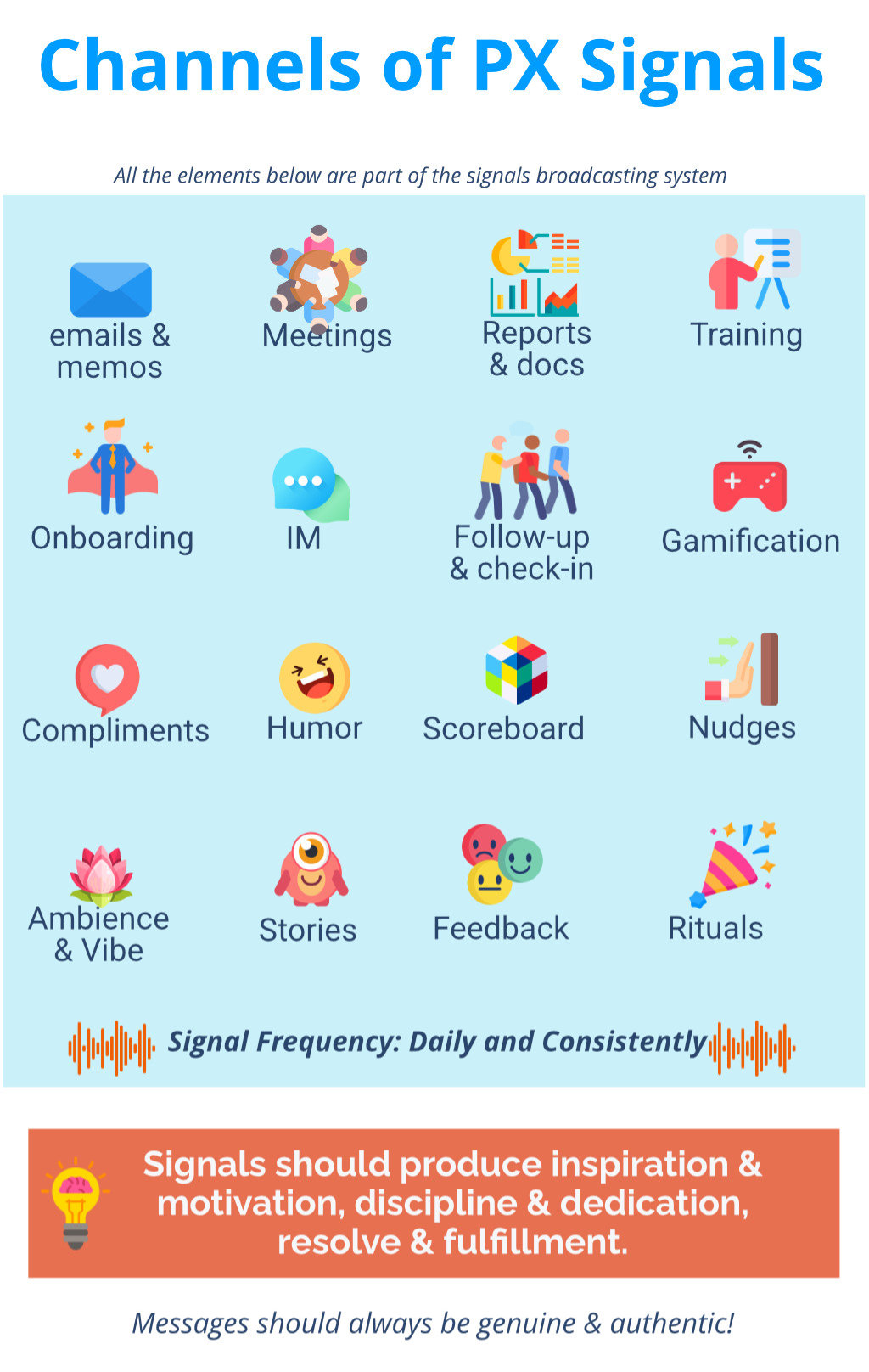
Almost anything in the project can and should carry the PX signals. These carriers or channels include emails, email signatures, memos, meetings, check-in, feedback, conversations, stories, nudges, compliments, follow-ups, hallway meetings, humor, gamification of assignments, scoreboards, project office decorations, etc. Ideal PX-signal should be immersive, consistent, and coherent with the project’s purpose, values, and goal.
Themes of PX Signals
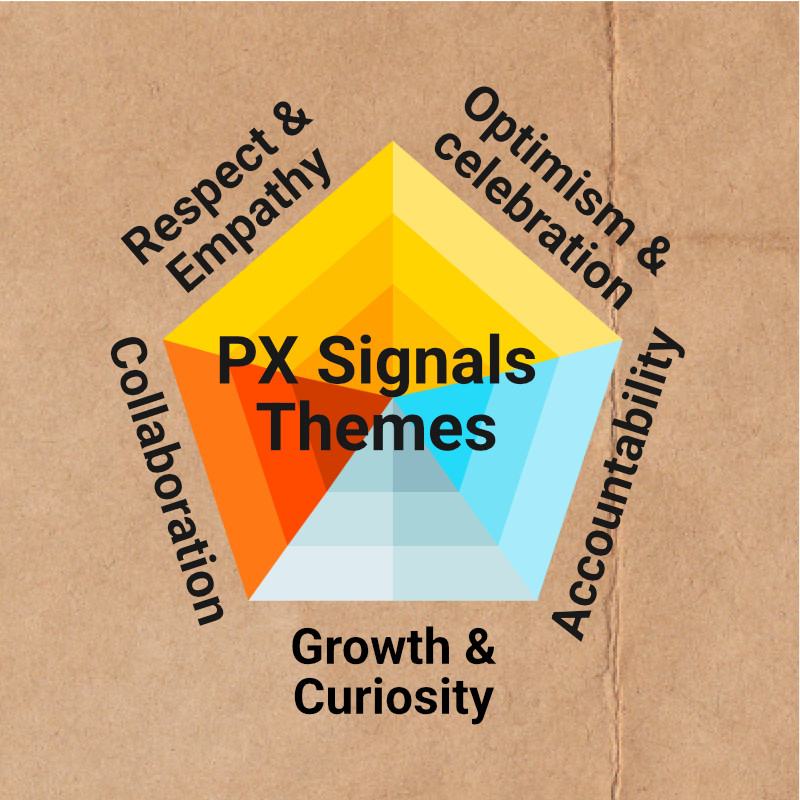
Signals (or messages) at the foundation should carry any of the five core themes and one work-specific theme. They are:
- Respect & Empathy: Needless to say, all communication should be respectful. Respect is about human dignity and self-esteem. Respect for a human being cannot be a function of performance in a project.
- Optimism & celebration: Lean towards optimism even when the project KPIs are not sunny. Celebrate success – small or big. These celebrations do not have to be any grand gesture; even a recognition of little achievements can motivate the team.
- Accountability: Maintain respect, but enforce accountability. We have already established the rule that psychological safety must be balanced with a system of accountability. So signals should have a message of responsibility whenever relevant. Remind teammates of values, goals, current realities, and priorities. Where are we, and where do we need to be? Reach out to individuals who need to catch up or speed up.
- Growth & Curiosity: I have not known anyone who does not enjoy learning something new or acquiring a new skill – even people who do not actively pursue development. Signals should always encourage an environment of curiosity and growth.
- Collaboration: Push for collaboration — compliment teamwork. Please be on the lookout for cognitive dissonance when you ask for cooperation, but celebrate individual performance. Cognitive dissonance will drive project workers to pursue solo glory instead of helping each other.
PX signal theme pentagon:
Work-specific theme:
PX signals with work-specific themes must be configured based on the assignments a team member works with. Most project work can be divided into five areas (or their mix). They are:
- Creative
- Repetitive
- Development & research
- People facing
- Managerial or decision-making
PX signals can be different for different types of workers. For example, the leadership board (i.e., gamification) may work with people who do repetitive work but may not work well with a creative worker. As a project leader, you should be cognizant of the type of assignments workers do and configure the messages accordingly.


